
Travel Essentials
Thailand Solo Travel Budget: How Much Should You Save?
Forget the one-size-fits-all daily budget number. Here's how to build a figure that actually matches how you travel.
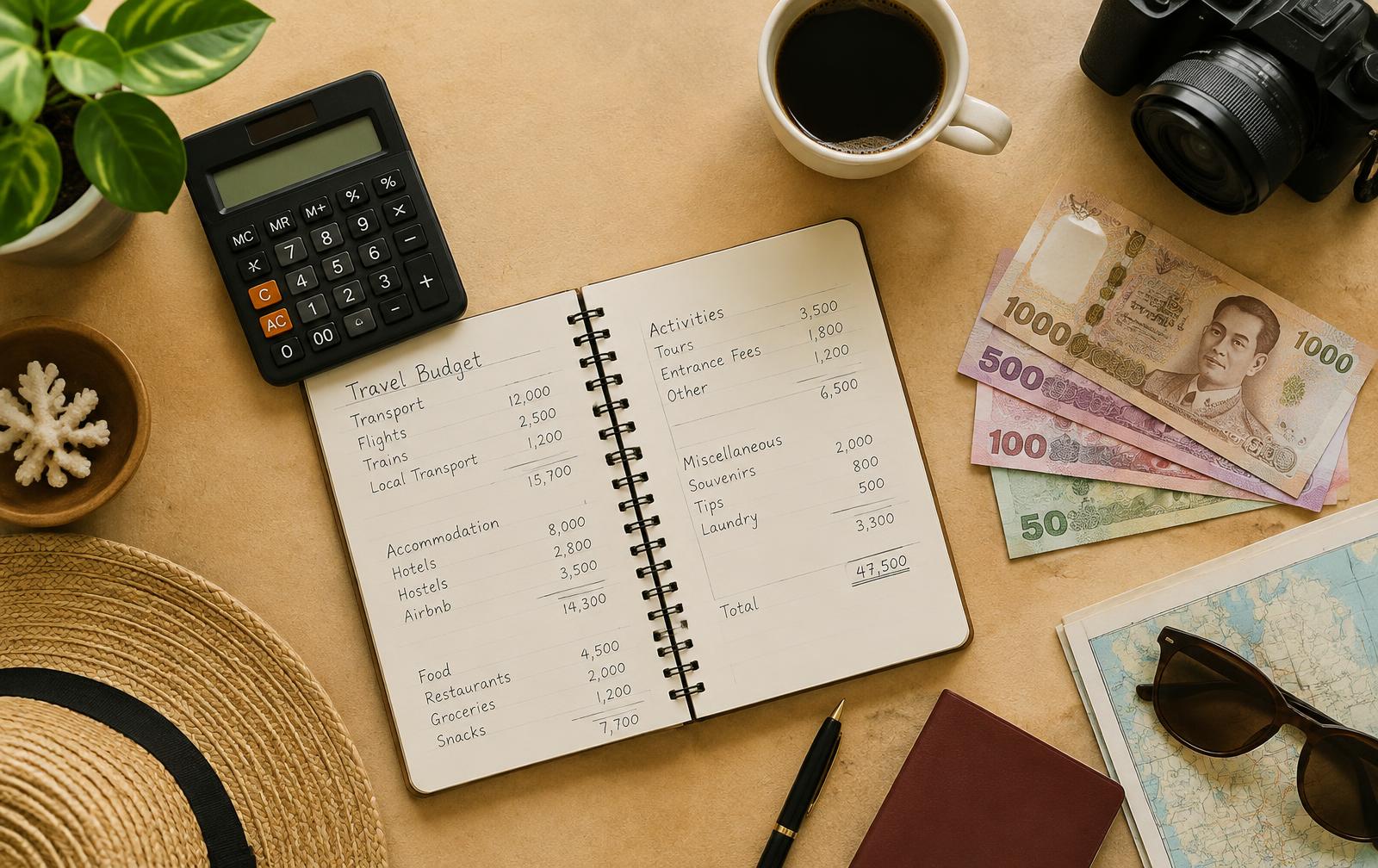
You've probably seen the headlines: "Backpack Thailand on very little a day!" or "Luxury Thailand for less than you'd expect!" Both can be true, and both are useless to you until you know which traveler you actually are. A daily budget number that isn't built from your own habits — how you sleep, how you eat, how much you value not thinking about money on vacation — will either stress you out or make you overpack your wallet for no reason.
This guide won't hand you a single magic number. Instead, it'll walk you through the categories that make up a Thailand trip, show you three illustrative examples of how they add up for different travel styles, and flag the places where solo travelers specifically tend to get caught off guard. Treat every figure here as an example for planning, not a quoted rate — prices shift, and you should always check current costs closer to your travel dates.
If you want to skip the math and get a personalized estimate, our budget calculator does the category-by-category work for you. This article is the reasoning behind that tool.
The categories that make up your budget
Before you can build a daily number, break your trip into the pieces that actually cost money. Lumping everything into "spending money" is how people either overestimate wildly or run out mid-trip.
- International flights — usually your single biggest line item, and the most worth comparison-shopping and booking early.
- Accommodation — where solo travelers feel costs differently than groups (more on this below).
- Food — from street-stall meals to sit-down restaurants, and everywhere in between.
- Local transport — getting around within a city: BTS/MRT fares, ride-hailing apps, tuk-tuks, songthaews.
- Intercity transport — trains, buses, domestic flights, or ferries between destinations.
- Activities and tours — temple entry fees, island-hopping tours, cooking classes, diving certifications.
- Visas and insurance — entry requirements change, so treat any number here as provisional and verify current rules before booking; travel insurance is a cost category people forget to budget for at all.
- Contingency — the buffer for the things you didn't plan for, which on any trip is not optional.
Missing any one of these from your planning is usually where "I thought I budgeted enough" trips come from.
Build your number from your travel style, not a stranger's
The most useful question isn't "what does Thailand cost?" It's "what kind of trip am I actually taking?" Here are the inputs that matter most:
- How do you want to sleep? A hostel dorm, a private guesthouse room, or a hotel with a pool changes your accommodation line dramatically — see our comparison of hotels vs Airbnbs for the tradeoffs.
- How do you want to eat? Street food and local restaurants most nights, with the occasional splurge, keeps food costs low without feeling deprived. Eating every meal at hotel restaurants or tourist-zone cafes adds up fast.
- How many destinations, and how are you moving between them? Every hop between cities costs money and time. Our guides to getting around Thailand without a scooter and the 7-day and 14-day itineraries can help you see how pace affects cost.
- What do you actually want to do? A trip built around free beaches and temples costs less than one built around diving certifications and multi-day tours.
Answer those honestly, and you're most of the way to a number that fits you.
Three illustrative examples
These are planning examples only, built to show how the categories interact — not quoted current prices. Use the shape of these tables, not specific figures, and confirm real costs with our budget calculator or current listings before you commit.
Example A: Comfortable-but-careful
A traveler staying in well-reviewed guesthouses and budget hotels, eating mostly local food with occasional treats, and using public transport and buses between cities.
| Category | Example daily allowance |
|---|---|
| Accommodation | Budget hotel or guesthouse private room |
| Food | Street food, local restaurants, one nicer meal every few days |
| Local transport | BTS/MRT, occasional ride-hailing |
| Activities | One paid activity every 2-3 days, rest free/low-cost |
| Contingency | Small daily buffer |
Example B: Boutique comfort
A traveler who wants a nice room to come back to, doesn't want to think hard about every transport decision, and mixes local meals with a few sit-down restaurants.
| Category | Example daily allowance |
|---|---|
| Accommodation | Boutique hotel or well-located mid-range hotel |
| Food | Mix of local spots and restaurants, occasional cafe splurges |
| Local transport | Ride-hailing apps used freely, some taxis |
| Activities | A paid activity most days, including a few tours |
| Contingency | Moderate daily buffer |
Example C: Affordable luxury
A traveler prioritizing comfort and convenience — nicer hotels, private transfers between cities, and a more relaxed attitude toward daily spending.
| Category | Example daily allowance |
|---|---|
| Accommodation | Upscale hotel, possibly with pool or breakfast included |
| Food | Restaurants most meals, occasional fine dining |
| Local transport | Ride-hailing and taxis by default, minimal public transport |
| Intercity transport | Domestic flights or private transfers over buses/trains |
| Activities | Private or small-group tours, spa visits |
| Contingency | Generous daily buffer |
Notice what doesn't change much between these three: flights, visas, and insurance are largely fixed costs regardless of style. What changes is accommodation, food, and how much convenience you're paying for in transport and activities.
The single traveler's room-cost problem
Here's the thing nobody tells you clearly enough: most accommodation pricing is built around two people splitting a room. When you travel solo, you either pay the full "double" rate for a private room, or you go the dorm route to keep costs down. There's no way around this math — it's the single biggest reason solo travel often costs more per person than traveling with a partner.
A few ways to soften it:
- Hostels with good private-room options. Many hostels now offer private rooms alongside dorms, letting you get privacy without a full hotel rate.
- Longer stays, lower nightly rates. Many properties discount for stays of a week or more — worth asking about if you're settling into one base.
- Mixing dorm nights and hotel nights. Budget accommodation for a few nights, then treat yourself to a nicer hotel when you want the reset. This is worth planning intentionally rather than defaulting to one or the other for the whole trip.
- Off-peak timing. Traveling outside peak season can meaningfully lower accommodation costs, though it comes with weather tradeoffs worth researching for your specific destinations.
For a deeper look at how to weigh these choices, see hotels vs Airbnbs in Thailand and where to stay in Bangkok for a first solo trip.
Where costs quietly escalate
Budgets don't usually blow up from one big purchase — they leak from small, repeated ones. Watch for:
- Bottled water and drinks, especially in tourist areas where prices near attractions run higher than a few streets away.
- Convenience-store snacking that adds up faster than a sit-down meal would have.
- Ride-hailing habits — a few short rides a day feels harmless individually but compounds over two weeks.
- "Just this once" taxis from tourist zones or transport hubs, which often charge more than metered alternatives.
- Tour add-ons — the base tour price looks reasonable until every optional extra gets tacked on.
- ATM withdrawal fees, especially if you're making many small withdrawals instead of fewer larger ones (weigh this against carrying too much cash, too).
None of these are reasons to be paranoid about every purchase — that's its own way to ruin a trip. But knowing where the leaks tend to happen lets you build a realistic contingency line instead of an optimistic one.
Saving timeline: working backward from your trip
Once you have a rough total, work backward from your departure date rather than trying to save it all in the final month. A simple approach:
- Nail down flights and any big-ticket bookings first — these are often the least flexible and can be worth booking early when the routing works.
- Set a monthly savings target by dividing your total trip cost (flights + estimated ground costs + contingency) by the number of months before departure.
- Automate a transfer into a separate savings account so the money isn't sitting in reach of everyday spending decisions.
- Reassess a month out — check real flight and accommodation costs against your estimates and adjust your daily spending plan if needed.
Cards vs. cash
Most travelers use a mix of both. Cards are convenient for larger purchases and give you a paper trail, but not every stall, small guesthouse, or local transport option accepts them — cash is still essential for day-to-day spending in many places. A few general principles, without quoting specific fees or rates that change over time:
- Check your card's foreign transaction fee policy before you go — some cards charge extra for purchases made abroad, others don't.
- ATM withdrawals typically involve fees on both ends — from the local bank and sometimes your home bank. Withdrawing larger amounts less often usually beats many small withdrawals, balanced against not wanting to carry too much cash.
- Carry a mix of denominations once you've withdrawn cash — small vendors and transport often can't break large notes.
- Tell your bank you're traveling if that's part of your bank's fraud-prevention process, so a card decline doesn't derail your day.
- Keep a backup payment method separate from your primary wallet, in case a card is lost or a machine eats it.
Exact fee structures vary by bank and change over time, so check your own provider's current terms before you leave rather than assuming.
Putting it together
The honest answer to "how much should I save?" is: enough to cover your fixed costs (flights, visas, insurance) plus a daily rate built from your real habits across accommodation, food, transport, and activities — plus a contingency buffer you don't touch unless you need to. Building it category by category, rather than borrowing a stranger's headline number, is what makes a budget actually hold up once you're there.
When you're ready to turn this framework into an actual number for your trip length and style, our budget calculator walks through each category and gives you a personalized estimate. Pair it with the trip planner to see how your budget interacts with your itinerary before you book anything.