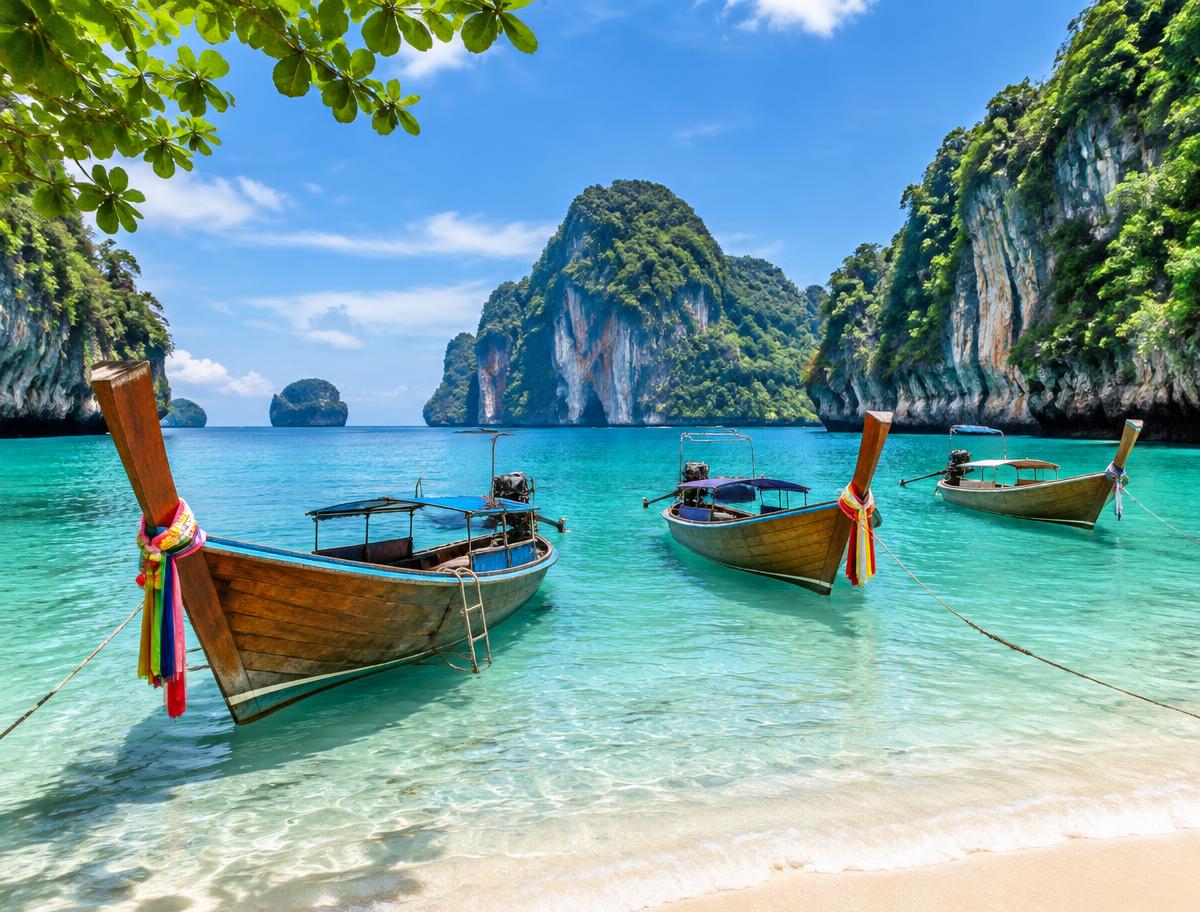
Destinations & Experiences
Best Island-Hopping Tours From Krabi
Krabi's island-hopping trips come in a handful of standard formats. Here's how they differ, what to expect, and what to check before you book.
Read Guide
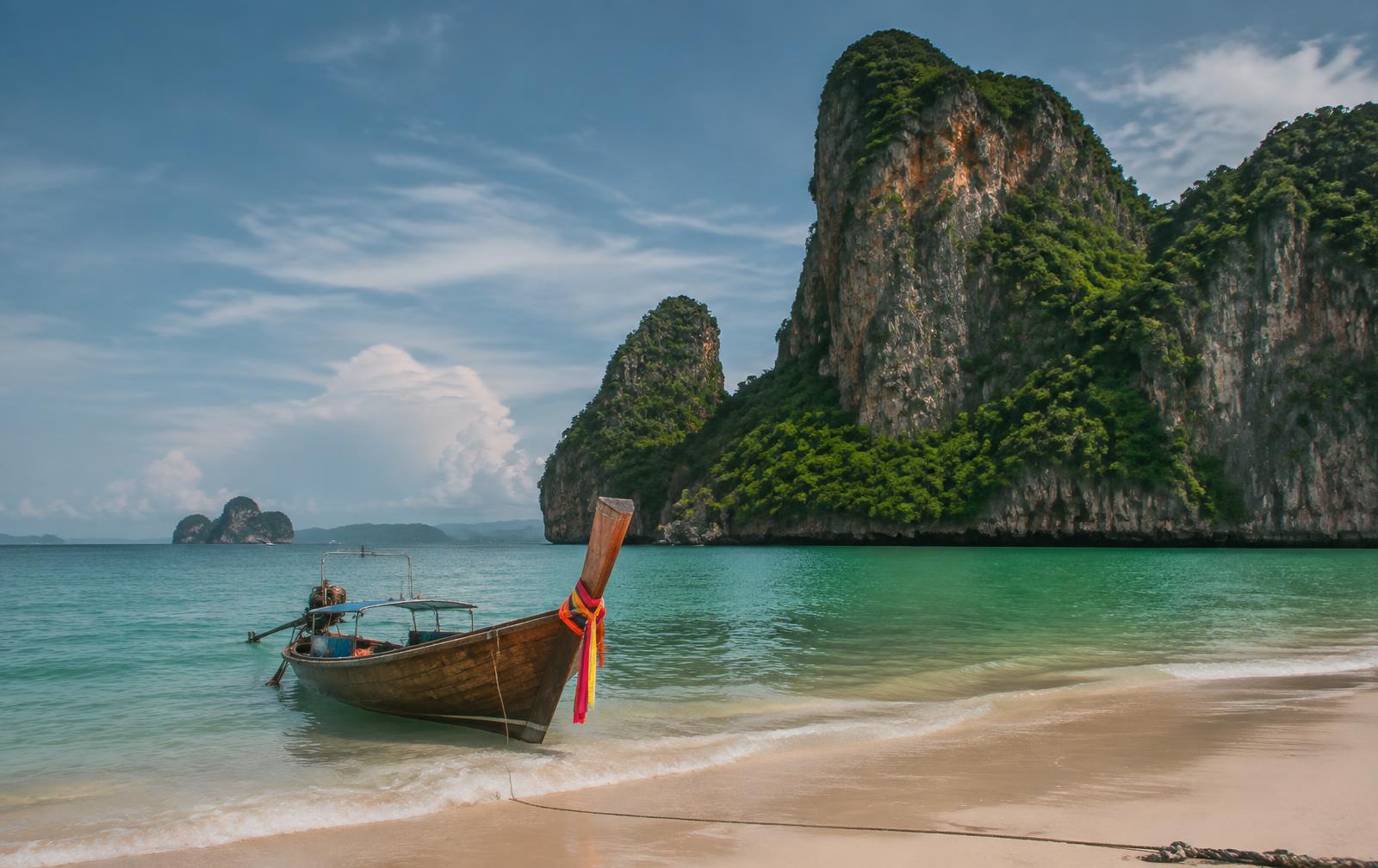
Destination guide
Limestone cliffs, beach-only towns, and boats instead of roads.
Krabi is where Thailand's limestone karst scenery is at its most dramatic, with towering cliffs rising straight out of turquoise water around Ao Nang and the beach-only peninsula of Railay. It's a slower, more scenic alternative to Phuket, built around boats rather than roads.
Krabi province covers a stretch of mainland coast plus a scattering of islands, and its defining feature is the limestone karst scenery, sheer cliffs, hidden lagoons, and islands that look sculpted rather than eroded. It's a smaller, quieter alternative to Phuket, with a more nature-focused feel and fewer large-scale resort strips.
The province's two best-known areas, Ao Nang and Railay, sit right next to each other on the map but are reached completely differently: Ao Nang has road access, while Railay is only reachable by boat, cut off from the mainland by the same cliffs that make it famous. That distinction shapes almost every practical decision you'll make about where to stay and how to get around.
Krabi is also one of the best regions in the country for combining beach time with activity, rock climbing on Railay's cliffs, kayaking through mangroves, and boat trips to nearby islands are all easy to build into a few days here. If you're weighing Krabi against Phuket for your itinerary, the 14-day itinerary shows how both can fit into a longer trip.
Ao Nang is the main tourist hub and the easiest base for a first visit, a walkable beachfront strip with restaurants, dive shops, and tour operators, plus road access to Krabi Town and the airport. It has a wide range of stays, from budget guesthouses to larger resorts.
Railay, just a short longtail boat ride from Ao Nang, is the standout choice if you want to wake up surrounded by cliffs rather than commute to see them. It's split into a few beaches (Railay West, Railay East, and Phra Nang) each with a different character, West for sunset and resorts, East for budget stays and mangroves, and Phra Nang for arguably the most beautiful beach in the area. Because it's boat-access only, Railay feels more remote and peaceful than Ao Nang despite being minutes away.
Krabi Town, on the mainland, is more of a practical transit hub than a beach base, useful if you're arriving by bus or need services, but not where most travelers choose to stay for leisure.
Koh Lanta, further south, is a quieter island option with long beaches and a slower pace, reachable by road and ferry combination or direct boat depending on the season, worth considering if Ao Nang and Railay feel too busy. For general guidance on comparing stays, see hotels vs Airbnbs and the where to stay page.
Krabi is one of the best bases in Thailand for island-hopping, thanks to its position on the Andaman coast. The Four Islands tour (Poda, Tup, Chicken Island, and Phra Nang Cave Beach) is the classic half-day trip from Ao Nang, combining snorkeling with some of the region's most photogenic limestone scenery.
Phi Phi Islands are a full-day trip from Krabi, similar to the tours running from Phuket, and cover Maya Bay and Pileh Lagoon along with snorkeling stops. Closer to home, a longtail boat trip around the Ao Nang and Railay coastline at sunset is a low-cost, low-effort way to see the cliffs from the water without committing to a full-day tour.
For something more active, kayaking trips into the mangroves near Ao Thalane or the Bor Thor river are a quieter, more paddle-your-own-pace alternative to a group boat tour. Most of these trips are easy to book as a solo traveler through your guesthouse or a local tour desk, and shared-group formats mean you'll likely have company for the day. See best island-hopping tours from Krabi for more detail on comparing operators and trip types.
Railay is one of the most respected rock climbing destinations in Southeast Asia, and it's genuinely beginner-friendly, several climbing schools on Railay West and East offer half-day introductory courses with equipment included, making it an approachable solo activity even if you've never climbed before.
Beyond climbing, Krabi's beaches are the main event: Phra Nang Beach on Railay is frequently ranked among the country's best, with a dramatic cave shrine at one end. The Emerald Pool and Blue Pool in Khao Phra Bang Khram Wildlife Sanctuary are a popular inland day trip for a swim in strikingly clear, mineral-rich water.
Tiger Cave Temple (Wat Tham Suea), near Krabi Town, involves a steep climb of over a thousand steps to a hilltop shrine with panoramic views, and is a good half-day cultural and physical challenge if the beach alone isn't enough. Ao Nang's night market is a reliable, low-key spot for dinner and browsing after a day on the water.
Krabi International Airport (KBV) has domestic connections from Bangkok and a growing number of direct international routes, and it's roughly 30-40 minutes by road from Ao Nang. Overland travel from Phuket or Bangkok by bus is also common, particularly for travelers combining several stops.
The key thing to understand about getting around Krabi is that roads only get you so far. Ao Nang and Krabi Town are road-connected, but Railay is boat-only, longtail boats run frequently from Ao Nang's beach and take about 15 minutes, though they can pause for rough weather. If you're island-hopping, expect most days involving Railay or the outer islands to revolve around boat schedules rather than road transport, so build some flexibility into your plans. For more on navigating Thailand without renting your own vehicle, see getting around Thailand without a scooter.
Three to five days is a good range for Krabi, enough for a couple of days based in Ao Nang or Railay, one day for island-hopping, and a bit of flexibility for a climbing session or an inland day trip to the Emerald Pool. Add extra days if you want to split your stay between Ao Nang and Railay, or continue on to Koh Lanta.
A few planning notes: longtail boats to Railay can be delayed or paused in rough weather, particularly during the monsoon season (roughly May to October), so build in a buffer if you have a flight to catch. Book island tours a day or two ahead where possible, wear reef-safe sunscreen, and bring cash, since smaller boat operators and beach vendors don't always take cards. If you're weighing Krabi against nearby Phuket for your trip, the budget calculator can help you compare daily costs across both.
Where to stay
The main road-accessible tourist hub with the widest range of stays and tour operators.
Boat-access only, known for sunset views and resort-style stays.
Budget-friendlier side of Railay, backed by mangroves rather than swimmable beach.
Often ranked among Thailand's best beaches, with a cliffside cave shrine.
A quieter island option further south for travelers wanting fewer crowds.
Things to do
The classic half-day boat trip from Ao Nang covering snorkeling and Phra Nang Cave Beach.
Beginner-friendly half-day courses with equipment included.
A full-day boat excursion covering Maya Bay and Pileh Lagoon.
A clear, mineral-rich inland swimming spot in Khao Phra Bang Khram sanctuary.
Over a thousand steps to a hilltop shrine with panoramic views.
A low-cost way to see the Ao Nang and Railay cliffs from the water.
A quieter, self-paced alternative to a group boat tour.
Easy, low-key dinner and browsing after a day on the water.
Destinations & Experiences
Krabi's island-hopping trips come in a handful of standard formats. Here's how they differ, what to expect, and what to check before you book.
Read Guide
Itineraries
Two weeks is the sweet spot for a first solo trip to Thailand: enough time for three bases without living out of a suitcase every other day.
Read Guide
Travel Essentials
You don't need to ride a scooter to see Thailand well. Here's how to get around comfortably and safely without one.
Read Guide
Travel Essentials
Forget the one-size-fits-all daily budget number. Here's how to build a figure that actually matches how you travel.
Read Guide
Beautiful Stays
There's no universal right answer — just the right answer for this specific trip. Here's how to think it through.
Read Guide