Travel Essentials
Getting Around Thailand Without a Scooter
You don't need to ride a scooter to see Thailand well. Here's how to get around comfortably and safely without one.
Scroll through any Thailand travel forum and you'll find someone insisting that renting a scooter is the "real" way to see the country. It isn't, and you don't owe anyone that risk. Thailand has one of the higher rates of road traffic incidents involving tourists on rented scooters, many first-timers have never ridden on the left side of the road or in this kind of traffic, and a solo injury far from home is a genuinely bad way to end a trip. Choosing not to ride is a reasonable, common decision — not a compromise you need to apologize for.
The better news is that Thailand's non-scooter transport options are genuinely good. Bangkok has an efficient rail network, intercity trains and buses connect most places worth going, and ride-hailing apps have made "how do I get from A to B" a much smaller daily decision than it used to be. This guide walks through your options city by city and route by route, so you can build a trip that never requires you to twist a throttle.
Why skipping the scooter is a reasonable choice
A few honest reasons this is a sound decision for a lot of solo travelers, not just a cautious one:
- Traffic patterns and road rules differ from what many visitors are used to, and there's no substitute for local experience you don't have on day one.
- Solo means no one to help if something goes wrong — no partner to flag down help, hold your bag, or make decisions for you while you're not okay.
- Rental insurance gaps are common — many personal insurance policies and even some rental agreements have exclusions or requirements (like a proper motorcycle license) that catch people off guard after an incident, not before.
- You lose very little by skipping it. Every destination in this guide is fully accessible by other means; a scooter mostly buys convenience, not access.
None of this means scooters are never a good choice for anyone — plenty of experienced riders travel this way safely. It just means "I'm not riding" is a complete, sufficient answer that requires no further justification.
Getting around Bangkok
Bangkok is the easiest major city in Thailand to navigate without a scooter, largely because its public transport network is modern and genuinely tourist-friendly.
BTS Skytrain and MRT subway
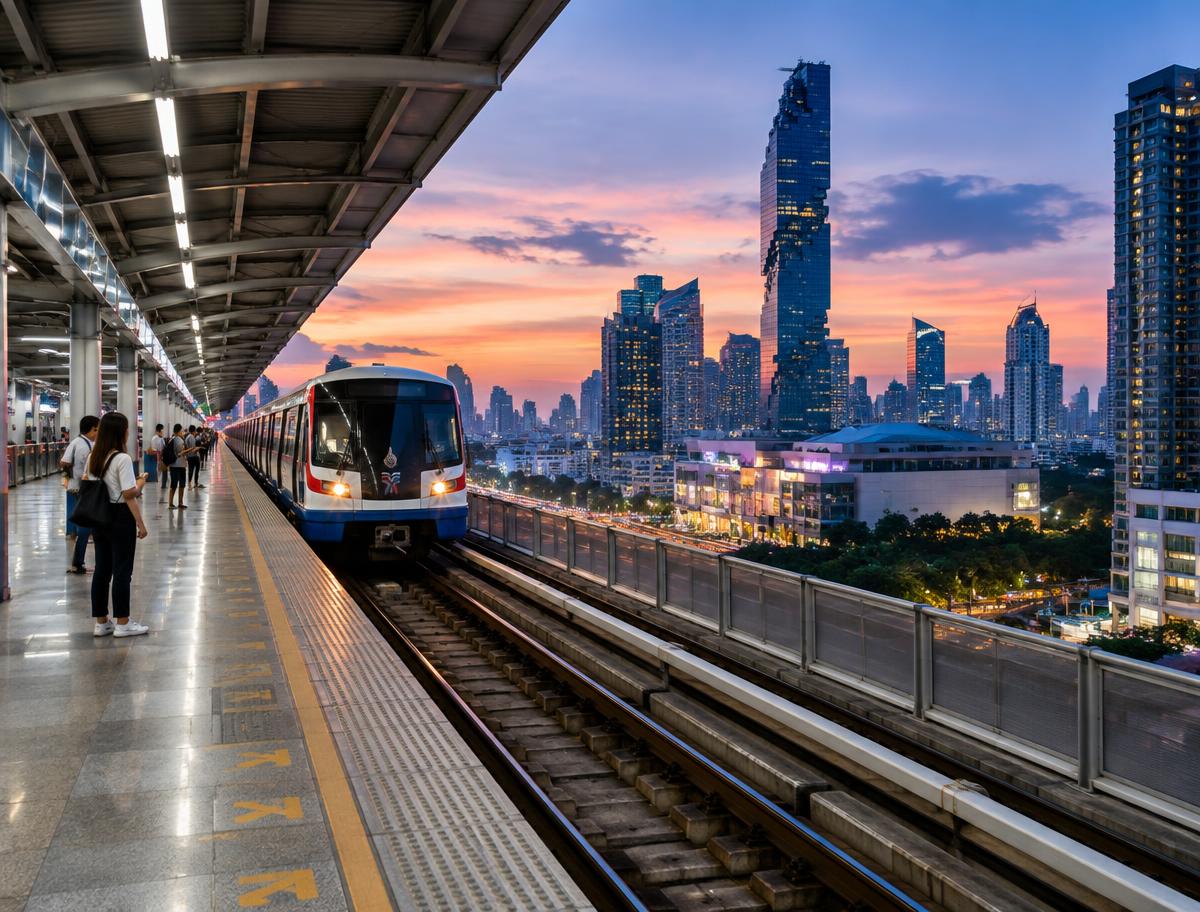
The BTS (elevated Skytrain) and MRT (underground) cover most of the areas travelers spend time in — shopping districts, business areas, and several neighborhoods with good hotel options. They're air-conditioned, easy to navigate with English signage, and avoid Bangkok's famous street-level traffic entirely. Rechargeable stored-value cards are available for frequent use, though check current options at a station when you arrive, since ticketing systems get updated.
River boats
Bangkok's Chao Phraya river boats are a practical and scenic way to reach riverside attractions — including many of the city's major temples — while skipping traffic entirely. There are different lines with different stop patterns, so check the route map at a pier before boarding, and note that some express lines skip stops that others make.
Ride-hailing apps
Ride-hailing apps are widely used in Bangkok and solve a lot of the "how do I explain where I'm going" problem that comes with hailing a taxi on the street, since the destination is set digitally. They're a solid default for point-to-point trips, especially at night or with luggage.
Metered taxis
Bangkok taxis are plentiful, and a metered ride is usually fair value — the key thing to confirm is that the driver will use the meter before you get in, since not all drivers will offer this upfront in tourist-heavy areas. If a driver refuses to use the meter, it's generally fine to find another cab.
Tuk-tuks
Tuk-tuks are more of an experience than a practical transport default — fun for a short ride, but usually not the cheapest or fastest way to get somewhere, and fares should be agreed before the ride starts since they're not metered. Treat them as a one-time novelty rather than your everyday transport.
For a broader sense of how to spend time in the city, see our guide to things to do alone in Bangkok and where to stay in Bangkok for a first solo trip.
Getting between cities
Thailand's intercity network gives you real options beyond flying, and several of them are worth choosing on their own merits, not just as a scooter alternative.
Domestic flights
For longer distances — Bangkok to Phuket, for instance — a domestic flight is often the fastest and most straightforward option, and can be competitively priced against slower alternatives when booked ahead. It's worth comparing against train or bus time realistically: a short flight plus airport transfers may not save as much time as it looks like on paper.
Trains, including sleeper trains
Thailand's rail network connects Bangkok to the north (Chiang Mai) and other regions, and overnight sleeper trains are a genuinely good solo-travel option — you save a night of accommodation cost while covering distance, and it's a memorable way to travel in its own right. Booking sleeper berths in advance is recommended, especially for popular routes and during peak travel periods, since availability is limited compared to seated cars.
VIP buses
Long-distance VIP or first-class buses are comfortable, air-conditioned, and connect most major destinations, often departing overnight for longer routes. They're generally slower than flying but a solid middle ground on cost and comfort, and a well-run route is a completely reasonable way to cover ground.
Private transfers
For point-to-point trips where public options are limited or timing matters — reaching a specific pier for an early ferry, for example — a private transfer van or car is worth the added cost for the convenience and predictability, particularly if you're traveling with more luggage or on a tighter schedule.
Destination-specific realities
Chiang Mai
Chiang Mai's old city is compact and very walkable, and a lot of first-time visitors are surprised how little transport they need day to day. For trips outside the old city walls — to temples in the surrounding hills, for instance — ride-hailing apps, red songthaew shared trucks, and pre-arranged tours all work well without a scooter.
Phuket
Phuket is the clearest example of how a spread-out destination changes your base choice. The island is large, and different areas (a bustling beach town versus a quieter stretch of coast) can be a substantial drive apart. Without a scooter, it's worth choosing a base near what you actually want to do, and leaning on ride-hailing apps, metered taxis, and organized tours to reach beaches or activities further afield. See our things to do alone in Phuket guide for how this affects planning.
Krabi
Krabi's biggest draws are largely reached by longtail boat rather than road, which actually works in your favor as a non-rider — boat transport is the default for many of the area's best experiences anyway. Island-hopping tours bundle multiple stops into a single organized day, which is often the most efficient way to see the area regardless of how you feel about scooters. Our guide to island-hopping tours from Krabi covers this in more depth.
Etiquette and safety practicalities
A few practical habits that make non-scooter transport smoother, regardless of destination:
- Have your destination written down or pulled up on your phone in the local script if possible — this avoids miscommunication, especially with taxi and tuk-tuk drivers.
- Agree on a fare before getting into an unmetered vehicle — tuk-tuks, some longer taxi trips, and songthaews often work this way.
- Keep small bills on hand for local transport, since drivers and boat operators may not be able to break large notes.
- Be cautious with unofficial transport touts around major tourist sites and transport hubs, who sometimes offer "deals" that aren't. A short walk to an official taxi stand or app-based pickup is usually worth it.
- Wear a seatbelt when one is available, even in a taxi or private van — a habit worth keeping regardless of local norms.
- Keep valuables close, not in an open basket or unsecured bag, on any open-air transport like tuk-tuks or songthaews.
Budgeting transport into your trip
Transport is its own line item, and it's easy to underestimate because individual rides feel small. A few things worth building into your planning, treated as examples rather than quoted prices:
- City transport (BTS/MRT/ride-hailing) adds up per day, not per trip — think of it as a small daily allowance rather than a one-time cost.
- Intercity transport is often the second-biggest transport cost after flights, especially if you mix a domestic flight with a couple of long-distance train or bus legs.
- Private transfers and organized tours cost more than public equivalents, but the time and stress saved is sometimes worth it, particularly on early-morning or tightly-timed connections.
- Build a little slack into arrival timing for anything with a fixed departure — ferries and trains don't wait, and traffic to reach them can be unpredictable.
For a full framework on building out your trip costs, see our Thailand solo travel budget guide, or use the budget calculator to estimate transport alongside everything else.
The bottom line
You can see essentially all of Thailand's major solo-travel destinations — Bangkok, Chiang Mai, Phuket, Krabi, and everything in between — without ever renting a scooter. Public transport in the cities is genuinely good, intercity trains and buses are comfortable options worth choosing on their own merits, and ride-hailing apps have made the in-between moments far less stressful than they used to be. Skipping the scooter isn't settling for a lesser trip; it's just one more way this itinerary is yours to build. For help mapping it all out, start with the trip planner or one of our itineraries.