Travel Essentials
What to Pack for Thailand: The First-Timer's Checklist
What to actually bring for Thailand's heat, temples, boat days, and long travel days — and just as importantly, what to leave home.
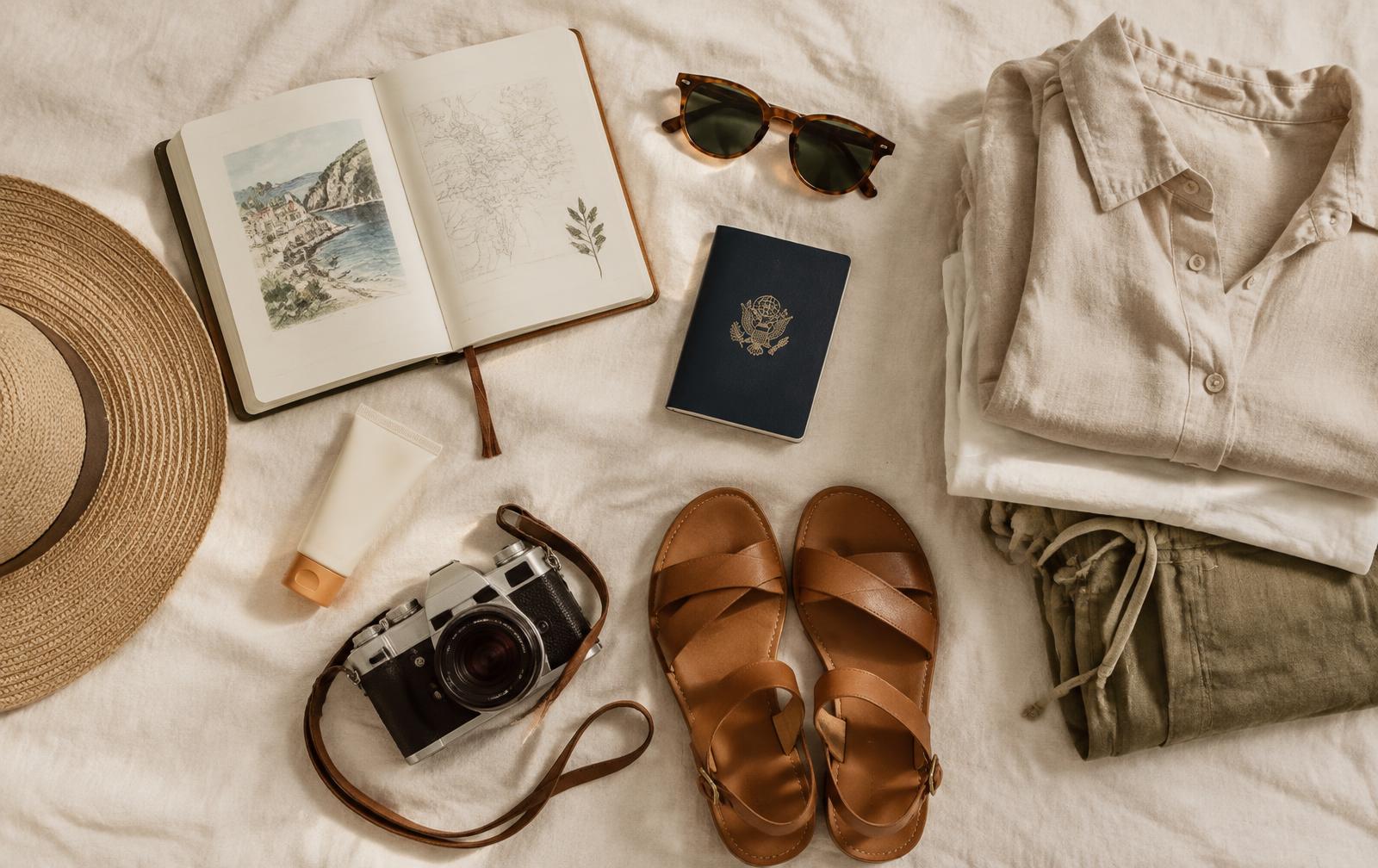
Packing for Thailand trips people up in a specific way: it's hot almost everywhere, almost all the time, so the instinct is to pack light and simple. But then you remember temples require covered shoulders and knees, boat days mean everything gets salty and wet, and you'll be living out of this bag for a week or two in humidity that treats every fabric choice as a test. The good news is that once you understand the handful of conditions you're actually packing for, the list gets short fast.
This guide walks through what to bring by category, explains the reasoning behind each choice, and — just as usefully — tells you what to leave at home and why. If you'd rather work from an interactive version you can check off as you pack, use our packing checklist alongside this guide.
Packing philosophy: carry-on first
Before the categories, one mindset shift that makes everything else easier: try to pack for a carry-on, even if you're allowed to check a bag. Here's why it matters more in Thailand than in a lot of other destinations:
- Domestic flights within Thailand often have tighter baggage allowances than international ones, and budget carriers charge for checked bags.
- You'll be moving between cities more than once on most itineraries — see the 7-day and 14-day itineraries for a sense of pace — and a smaller bag makes every transfer, tuk-tuk, and set of stairs easier.
- Laundry is cheap and widely available in most places travelers actually stay, from guesthouses to laundromats charging by weight. This alone removes the need to pack for every day of your trip; packing for about a week and doing laundry once mid-trip works for almost any trip length.
- Solo travelers don't have a second pair of hands to help wrangle luggage through a station or up a guesthouse staircase — a lighter bag is a real practical advantage, not just a minimalist preference.
If a carry-on-only trip feels unrealistic for you, that's fine — but even shooting for "as light as reasonably possible" will make your trip easier day to day.
Documents
Get this category sorted well before you're at the airport.
- Passport with sufficient validity remaining from your travel dates — check this rule against current requirements, as validity rules and visa policies can change.
- Visa or entry documentation, if required for your nationality and length of stay — verify current requirements directly with official sources close to your departure date, since these do change.
- Printed and digital copies of key documents — passport photo page, travel insurance policy, any visa paperwork. Keep one physical copy separate from your passport and a digital copy accessible offline.
- Travel insurance details, including the policy number and an emergency contact number, saved somewhere you can find it without wifi.
- A passport photo or two, occasionally useful for paperwork you can't fully predict in advance.
- Proof of onward travel, if your entry requirements call for it — again, confirm current rules before you fly.
Clothing
Thailand's climate is the organizing principle here: hot and humid nearly everywhere, with air conditioning indoors that can feel genuinely cold by contrast, and temple dress codes that require more coverage than the beach weather might suggest.
- Lightweight, breathable clothing — natural fibers like cotton and linen, or moisture-wicking synthetic fabrics, handle humidity better than heavier materials.
- At least one temple-appropriate outfit — shoulders and knees covered. A lightweight scarf or sarong can double as a cover-up if you're caught somewhere without planning ahead.
- A light layer for air conditioning — buses, trains, malls, and some restaurants run their AC cold enough to be uncomfortable in just a tank top.
- Swimwear, if your trip includes islands or beach time — see our guides on things to do alone in Phuket and island-hopping tours from Krabi.
- Comfortable walking shoes you've already broken in — city days involve more walking than people expect.
- Sandals or flip-flops for beach days, boat days, and the frequent shoe-removal at temples and some guesthouses.
- A light rain jacket or packable poncho, especially if you're traveling during the wetter months — check seasonal patterns for your specific dates and destinations.
- One slightly nicer outfit, if you think you'll want a nicer dinner or evening out at some point.
Toiletries
Keep this category lean — most basics are easy to buy locally if you run out or forget something.
- Reef-safe sunscreen, ideally packed rather than bought last-minute, since availability and selection vary by location.
- Insect repellent, particularly for evenings and any time near water or greenery.
- Basic toiletries in travel sizes — full-size bottles add weight and liquid restrictions complicate carry-on packing.
- Hand sanitizer and a small pack of tissues — not every bathroom you encounter will be stocked the way you're used to.
- Any prescription medications in their original packaging, ideally with a copy of the prescription, kept in your carry-on rather than checked luggage.
- A basic first-aid kit — adhesive bandages, motion sickness tablets if relevant, and any over-the-counter medication you rely on regularly.
Electronics
- Universal travel adapter — check the plug type used in Thailand before you go, as it may differ from what you're used to.
- Portable charger/power bank, genuinely useful on long travel days when you're relying on your phone for maps, tickets, and translation.
- Phone with offline maps downloaded in advance, plus a plan for data — a local SIM or eSIM is worth researching before arrival.
- A dry bag or waterproof phone pouch, if boat days or waterfalls are part of your plans.
- Headphones, for long train or bus journeys between destinations.
Health and essentials
- Any recommended vaccinations, discussed with a travel clinic or doctor well ahead of your trip — timing matters for some, so don't leave this to the last week.
- Travel insurance that covers medical care and evacuation, not just trip cancellation — this is worth taking seriously for solo travelers specifically, since you won't have a companion to manage things if something goes wrong.
- A written note of your blood type and any allergies, in case of a language barrier during a medical situation.
- Reusable water bottle — tap water isn't generally recommended for drinking, but bottled and filtered water are widely available, and a reusable bottle cuts down on plastic waste and cost over a trip.
Travel-day bag
What you carry on the day itself — for flights, long bus rides, or train journeys — deserves its own short list, since you'll want quick access without digging through your main bag.
- Passport, boarding passes, and a printed copy of key confirmations
- Phone, charger cable, and power bank
- A light layer for cold AC on planes, buses, and trains
- Snacks, especially for longer intercity journeys where food options may be limited
- An empty water bottle to fill after airport security
- A book, downloaded show, or something offline for stretches without signal
What NOT to bring, and why
- A hairdryer or travel iron. Most guesthouses and hotels provide one, and the plug/voltage mismatch risk isn't worth it for something you can usually find on-site.
- A full stack of "just in case" outfits. With laundry this accessible, packing for every possible day is unnecessary weight.
- Heavy or bulky shoes "just in case." One good walking pair and one sandal pair covers almost everything; a third pair is rarely worth the space.
- Excess cash-carrying gear like a bulky money belt for large amounts of cash — see our budget guide for more balanced thinking on carrying money.
- Expensive jewelry or valuables you'd be upset to lose. There's no upside to bringing them, and it's one less thing to worry about.
- Every toiletry brand you use at home. Travel sizes of the essentials, restocked locally as needed, beats a fully-loaded toiletry bag.
- A guidebook for every city if you're also using digital resources. Pick one format — paper or digital — rather than carrying the weight of both.
Packing by trip length
Trip length changes the math less than people expect, because of laundry access:
- A week or less: Pack for the trip length directly — you likely won't need laundry at all.
- Two weeks: Pack for about a week and plan one laundry stop, usually easy to slot in wherever you're staying a couple of nights.
- Longer trips: The same "pack for a week, do laundry regularly" logic holds — resist the urge to pack more just because the trip is longer.
Bringing it together
The short version: pack for heat and humidity, carry one temple-appropriate outfit, plan around laundry rather than against it, and keep your bag light enough that you're not fighting it through train stations and up guesthouse stairs. Everything else is either easy to buy there or easy to leave home.
For an interactive version of this list you can check off item by item, head to our packing checklist. And if you're still working out the shape of your trip itself, our first 24 hours in Bangkok guide and trip planner are good next stops.