First-Time Solo Travel
First-Time Solo Thailand: The Complete Beginner's Guide
Everything a first-time solo traveler needs to plan a Thailand trip with confidence, from picking cities to packing your bag.
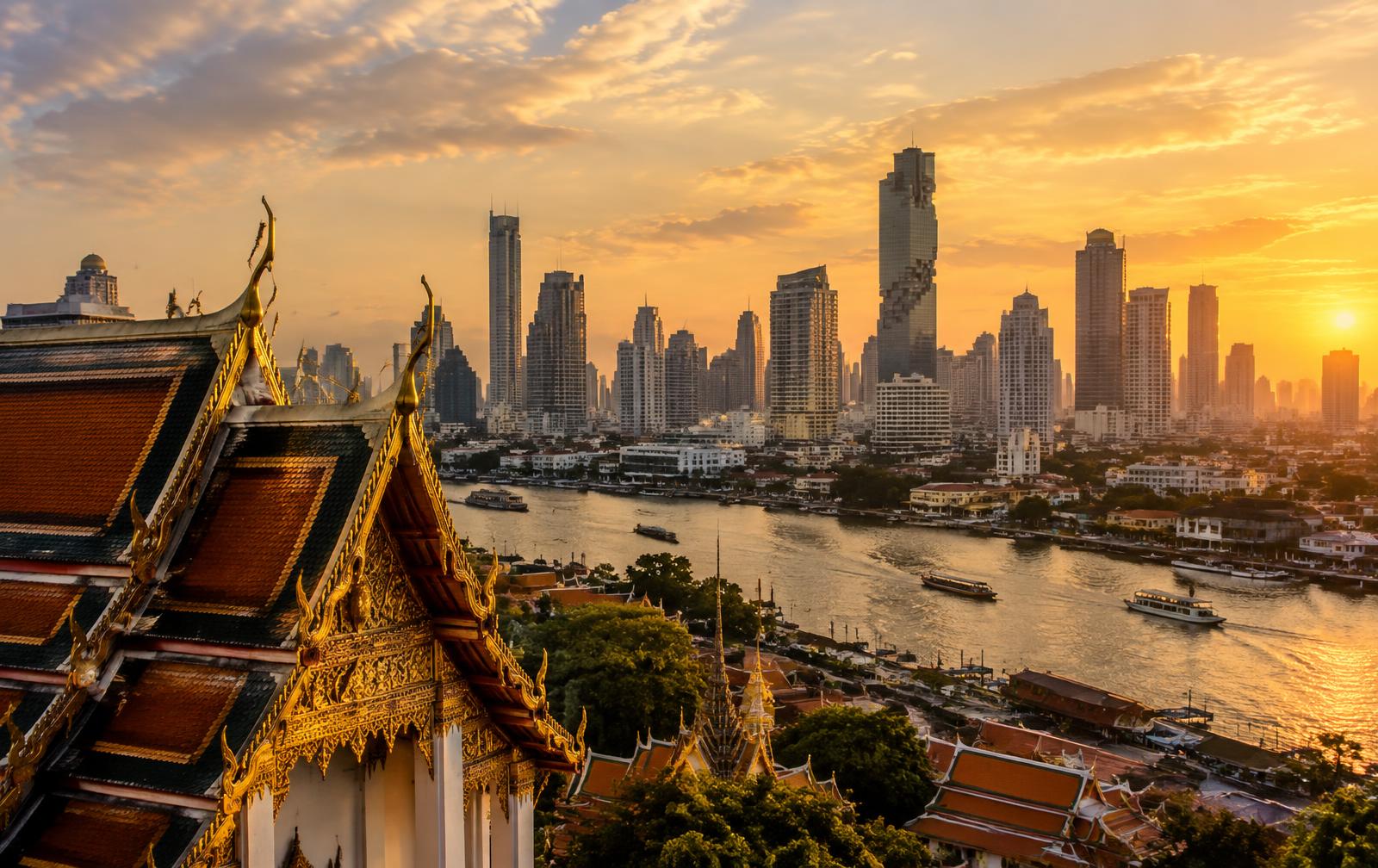
So you're thinking about going to Thailand alone. Maybe you've been putting it off waiting for a travel buddy who never quite commits, or maybe solo has been the plan from the start. Either way, you've landed in the right place, and I want to say this up front: Thailand is one of the most forgiving countries in the world for a first solo trip. It's not the easiest destination on paper, but its tourism infrastructure, English signage in cities, cheap and reliable transport, and sheer volume of other travelers doing exactly what you're about to do make it a genuinely good place to learn how to travel alone.
This guide is the long version — the one that covers the whole arc of planning, from "where do I even start" to "what do I pack." If you want the short, step-by-step version of the planning process itself, read How to Plan Your First Solo Trip to Thailand alongside this one. Think of this article as the reference you keep coming back to, and that one as the checklist.
Start with trip length, not destinations
It's tempting to open a map of Thailand and start circling places that look pretty. Resist that for a minute. The first real decision is how much time you have, because that number quietly decides everything else — how many places you can responsibly visit, how much flying or overnight-busing you'll tolerate, and how much money you'll need.
As a rough rule for first-timers: a trip under 7 days should probably stay in one region (Bangkok plus one nearby extension, or just an island). A 10-14 day trip can comfortably cover two or three regions — say Bangkok, Chiang Mai, and one island. Anything beyond that opens up the south's island-hopping routes properly. We've written out two ready-made frameworks you can adapt: the 7-day solo Thailand itinerary and the 14-day solo Thailand itinerary. If your trip happens to land on a birthday, there's also a dedicated solo birthday trip itinerary built around the idea of treating yourself well while traveling alone.
The single biggest planning mistake first-timers make is trying to cram in too much. Thailand looks small on a map of Asia, but Bangkok to Phuket is roughly the same distance as London to Rome. Chasing four or five destinations in ten days usually means you spend your trip in transit, exhausted, without ever settling into anywhere. Fewer stops, longer at each one, is the formula almost every experienced solo traveler ends up recommending in hindsight.
Choosing where to actually go
For a first solo trip, most people end up building around some combination of these:
- Bangkok — the practical entry point for most international flights, and worth two or three days in its own right for temples, markets, food, and rooftop bars. See our Bangkok destination guide and best things to do alone in Bangkok for specifics.
- Chiang Mai — slower, cooler in the hills, big on food and cafe culture, and generally considered one of the more relaxed cities to be a solo traveler in. Good if you want a contrast to Bangkok's intensity. See the Chiang Mai guide.
- Phuket — the easiest island base, with an international airport, a huge range of accommodation, and good jumping-off points for day trips. See things to do alone in Phuket and the Phuket destination guide.
- Krabi — dramatic limestone cliffs, quieter beach towns, and one of the best regions in the country for island-hopping tours from Krabi. See the Krabi guide.
A classic and genuinely low-stress first-timer route is Bangkok, then either Chiang Mai or an island in the south, rather than trying to do north and south in one trip. You can always come back — and a lot of people do.
Budgeting realistically
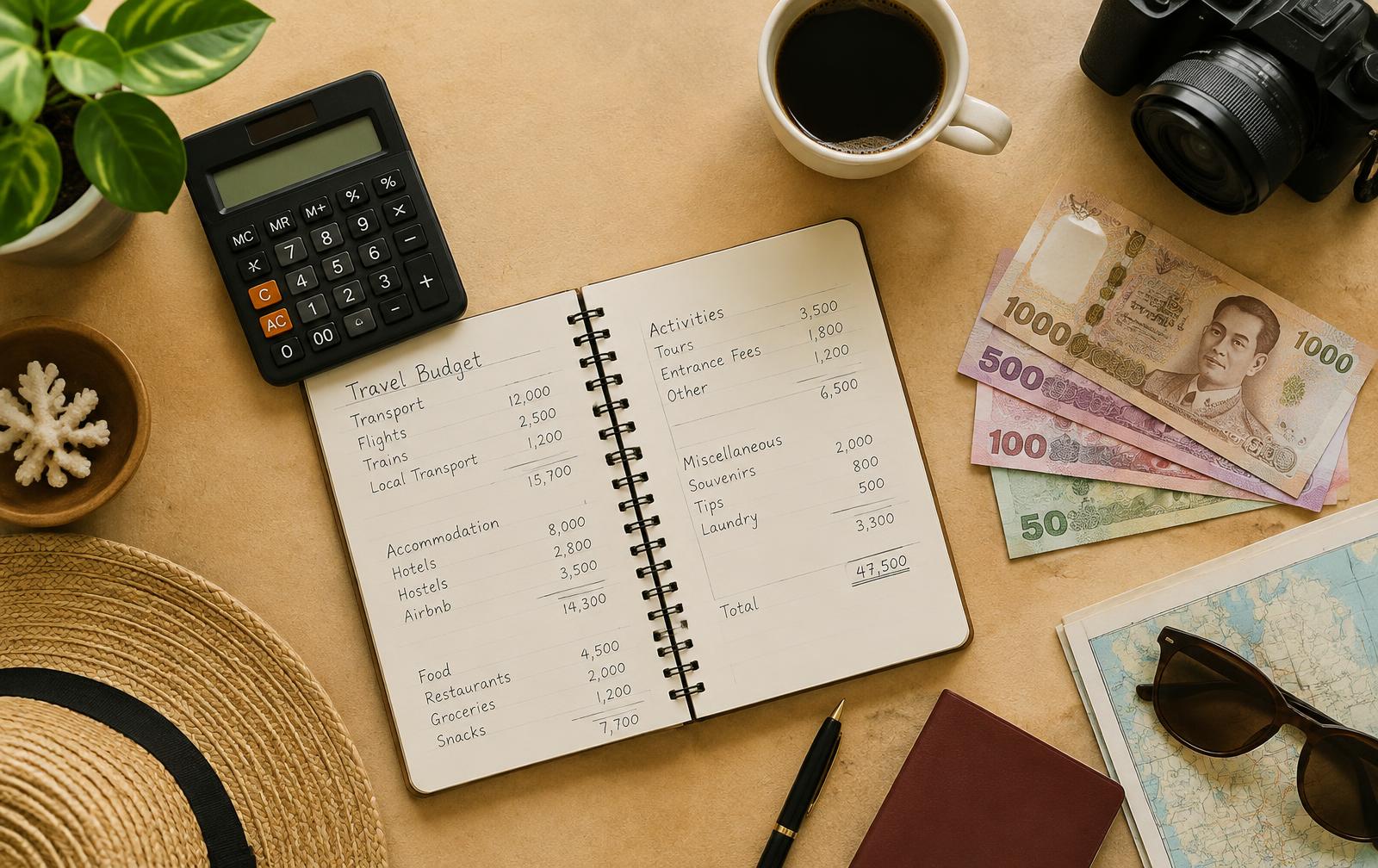
Thailand has a reputation as a budget destination, and it can be, but "cheap" depends entirely on the choices you make around accommodation and activities. Rather than throw out a single number, it helps to think in daily tiers.
As an illustrative planning figure only (verify current prices closer to your trip), a backpacker-style solo traveler mixing hostels, street food, and public transport might plan around $35-50 USD a day. Someone wanting private rooms, a mix of local and sit-down restaurants, and the occasional tour might plan closer to $70-100 a day. More comfortable trips with boutique hotels and private transfers can run higher still. None of these are quotes — they're a starting point for your own budget, which you should build out properly using our budget calculator and the fuller breakdown in Thailand solo travel budget.
A few budgeting habits that help specifically as a solo traveler:
- Build in a buffer of at least 10-15% above your estimate — traveling alone means every taxi, every tour seat, and every hotel room is priced for one person, with no one to split costs with.
- Book at least your first few nights of accommodation before you land, even if you plan to be spontaneous later. Arriving with nowhere booked adds unnecessary stress to your first day.
- Decide in advance how you'll access cash — a mix of a fee-free debit card and a small amount of backup cash is a common approach, but check your own bank's foreign transaction policies before you go.
Booking accommodation as a solo traveler
Where you stay matters more when you're alone, because your hotel or hostel is also your social base, your safe fallback, and often your source of local advice. For your first few nights especially, comfort and location beat saving a few dollars.
A few principles: stay somewhere with 24-hour staff and a solid pattern of recent reviews, look for a central or well-connected location over an objectively "prettier" but isolated one, and don't be afraid to pay a little more for your first two nights just to land somewhere easy. Our guide to where to stay in Bangkok for your first solo trip breaks this down by neighborhood, and beautiful Bangkok hotels under $100 is a good illustration of what's realistically available at that price point (treat any rates mentioned there as examples, not live quotes).
If you're deciding between a hotel and an Airbnb-style apartment, it's worth reading Hotels vs Airbnbs in Thailand before you book — the honest answer is that hotels tend to suit solo travelers better for short stays because of the built-in staff, security, and social touchpoints, while apartments can work well for longer stays in one place.
Getting around
Thailand's transport options are one of the country's genuine strengths for solo travelers. Domestic flights are inexpensive and frequent between major hubs, overnight trains and buses connect regions you'd otherwise have to fly, and within cities you've got the Bangkok BTS/MRT, metered taxis, ride-hailing apps, and tuk-tuks.
A lot of first-timers assume they'll need to rent a scooter to see Thailand "properly." You don't, and if you've never ridden one, your first solo trip abroad is not the moment to start — scooter accidents are one of the most common ways tourists get seriously hurt in Thailand. Our guide to getting around Thailand without a scooter walks through every alternative, and honestly, most of them are more relaxing anyway.
Preparing before you fly
In the weeks before departure, a few things are worth locking down:
- Entry requirements. Visa rules and any entry paperwork change periodically, so check Thailand's official immigration or your nearest Thai embassy website close to your departure date rather than relying on older blog posts — this includes ours.
- Travel insurance. A policy that covers medical treatment, evacuation, and trip cancellation is worth the cost for the peace of mind alone, especially traveling solo with no one to manage things if something goes wrong.
- Copies of documents. Keep a digital copy of your passport, insurance policy, and any bookings somewhere accessible without your physical passport, like cloud storage or emailed to yourself.
- A loose plan for your first 24 hours. Landing in an unfamiliar country after a long flight is not the time to be improvising your airport transfer. Our first 24 hours guide and the more detailed first 24 hours in Bangkok article cover this step by step.
Staying connected
Getting a Thai SIM card or eSIM is one of the easiest wins of the whole trip — cheap, widely available, and it immediately makes navigation, translation, and ride-hailing apps work properly. You can pick one up at the airport on arrival or set up an eSIM before you fly if your phone supports it. Either way, don't rely on hotel wifi alone; having your own data connection matters more when you're traveling without anyone else to lean on if you get lost or need to check something quickly.
Practical safety considerations
Thailand is, by most measures, a safe country to travel in alone, including for women traveling solo — millions do it every year. That said, "safe" doesn't mean "nothing to think about." A few practical habits go a long way:
- Share your rough daily plans with someone back home, especially if you're heading somewhere remote or doing an overnight trip.
- Use official metered taxis or ride-hailing apps rather than unmarked cars, particularly late at night.
- Keep your drink in sight at bars, and pace yourself if you're drinking around new people — this is standard travel advice anywhere, and it applies here too.
- Photograph your passport and keep the original in your hotel safe when you're out for the day, carrying a copy instead where that's accepted.
- Trust your gut about situations that feel off, even if you can't articulate exactly why. This is the single most reliable safety tool you have.
None of this should make you anxious about going. It's the same baseline awareness you'd bring to any city, adjusted slightly for being somewhere new.
Packing for the climate and the trip style
Thailand is hot and humid essentially year-round, with a rainy season that varies by region, so pack light, breathable fabrics over anything heavy. A few things first-timers commonly forget: modest clothing for temple visits (shoulders and knees covered), a portable charger for long transit days, a lightweight rain jacket if you're traveling in the wetter months, and comfortable shoes you can walk long distances in. Our full what to pack for Thailand checklist covers this in detail so you're not overpacking or underpacking on your first go.
Common first-timer mistakes worth avoiding
Looking back at what trips people up on their first Thailand trip, a pattern shows up again and again:
- Overpacking the itinerary. Covered above, but it deserves repeating — fewer places, more time, less regret.
- Not booking the first few nights. Landing with nowhere to go after a 12+ hour flight is avoidable stress.
- Underestimating transfer times. Bangkok traffic in particular can turn a "20 minute" trip into an hour; build in buffer time around flights.
- Ignoring the heat. Scheduling a packed sightseeing day in the middle of the afternoon heat is a fast way to burn out. Mornings and early evenings are your friends.
- Treating the whole country as one place. Bangkok, Chiang Mai, and the southern islands feel genuinely different from each other in pace and culture — plan for that variety rather than expecting a single "Thailand experience."
Putting together your itinerary
Once you've settled trip length, rough budget, and which regions you want to see, the actual itinerary-building gets much easier. Use the trip planner to sketch out your route day by day, cross-check it against one of our ready-made itineraries, and leave at least one day genuinely unplanned — some of the best moments on a solo trip come from the day you decided not to schedule anything.
Solo travel in Thailand rewards a light touch: enough planning to feel secure, enough flexibility to actually enjoy where you are. You don't need to have it all figured out before you land. You just need the first few days sorted, a realistic budget, and the willingness to ask for help when you need it — which, in Thailand, is almost always cheerfully given.